The hidden link between how you sleep and how well you breathe at night
Head and neck position during sleep is one of the most overlooked factors in nighttime nasal comfort.
Researched and fact-checked by the Airvana editorial team · Educational only — not medical advice
Posture does not stop when you lie down
We tend to think about posture as a waking concern — the way we sit at a desk, stand waiting for coffee, or hold our phone. But posture during sleep matters just as much, and possibly more, because the position you settle into at night is one you hold for six to eight hours without any active correction.
When sleep posture is poor — head too far forward, chin dropped toward the chest, neck compressed to one side — the upper airway narrows. Breathing becomes slightly harder. The body responds by shifting positions, which disrupts sleep continuity. In some cases, the airway restriction is significant enough to produce snoring or worse.
The relationship between posture and airway function during sleep is well-established in the sleep medicine literature. What is less well-known is how much a simple change in head and neck support can shift that equation.
Why your pillow matters more than you think
A pillow's job is to fill the space between your head and the mattress in a way that keeps your spine in a neutral position. For back sleepers, this means supporting the natural curve of the cervical spine without pushing the head too far forward. For side sleepers, it means bridging the distance between the shoulder and the head without tilting the neck sideways.
Most standard pillows are flat rectangles. They are not designed for any specific sleep position. They compress overnight, changing height as the night goes on. They provide the same support to the center of the head as they do to the area where the shoulder would ideally be clear.
The result, for many people, is a neck that spends the night in a position it was not designed to hold — and a morning that involves stiffness, soreness, and the vague feeling that sleep was not as restorative as it should have been.
The geometry of a side sleeper
Side sleeping is the most common sleep position and, in general, associated with more comfortable nighttime breathing than back sleeping. But it creates a specific mechanical challenge: the shoulder is in the way.
When you lie on your side, your shoulder is between your body and the mattress. A flat pillow pushes against the shoulder and forces the neck to compensate — either tilting upward (too much height) or dropping toward the mattress (not enough). Neither is a neutral position.
A cervical pillow designed for side sleepers accommodates the shoulder by creating space at the edges. The head rests in a central cradle, the neck is supported, and the shoulder sits naturally without cramping. This is the geometry a butterfly-shaped pillow is designed to address.
Back sleeping and the chin-drop problem
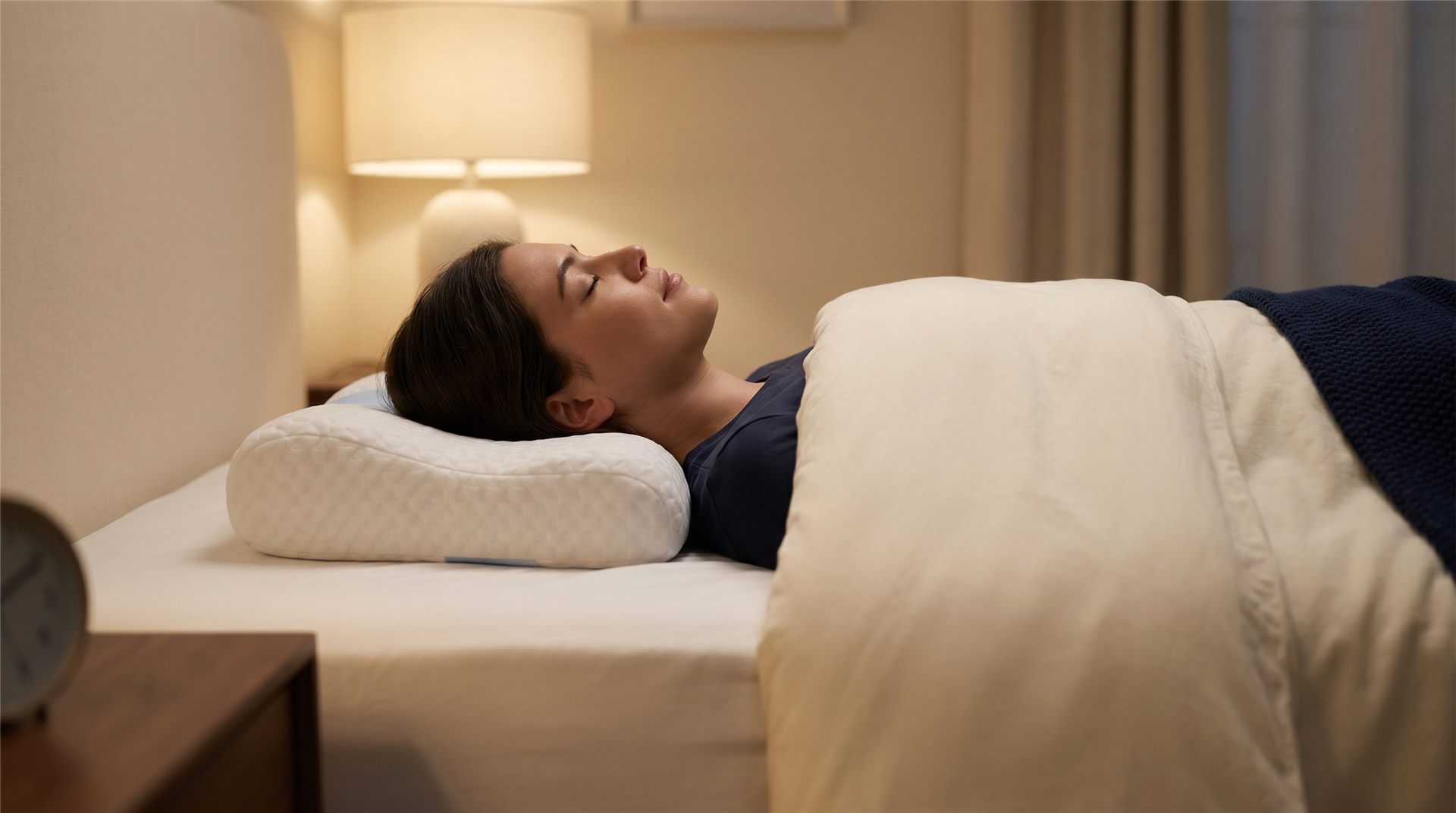
Back sleeping creates a different challenge. When the head is not adequately supported, gravity pulls the chin toward the chest. The airway narrows at the base of the tongue. Breathing resistance increases. Snoring is more likely.
The fix is a pillow that supports the back of the head at the right height — enough to maintain a neutral neck curve without pushing the head so far forward that it closes the angle between the chin and chest.
Dual-height cervical pillows address this by giving sleepers two options. One side is slightly higher, one slightly lower. Most people find their preferred height within a few nights.
Putting it together
- Sleep posture directly affects how open and comfortable the airway feels overnight.
- A flat rectangular pillow is not designed for any specific sleep position.
- Side sleepers need shoulder accommodation and neck support simultaneously.
- Back sleepers need enough head support to maintain a neutral cervical curve without chin-drop.
- The right pillow geometry reduces nightly position-shifting, which supports more continuous sleep.
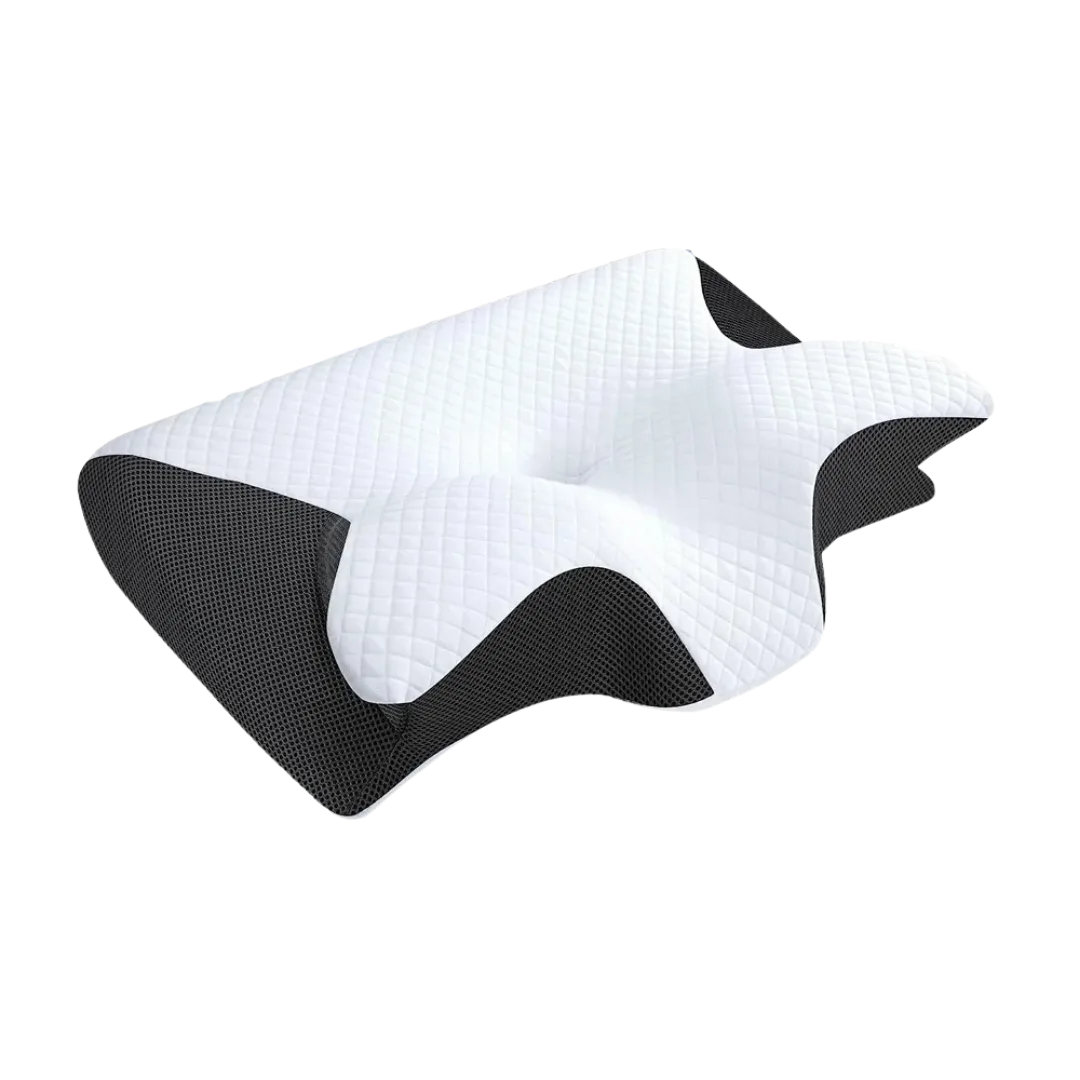
Airvana Sleep Pillow
A butterfly-shaped memory-foam pillow with two support heights, built around how your neck and shoulders actually sit at night — not just how a pillow looks in a photo.