Snoring vs. sleep apnea: the difference most people miss (and why it matters)
Not all snoring is the same. Here is how to tell the difference between a comfort issue and a medical one.
Researched and fact-checked by the Airvana editorial team · Educational only — not medical advice
Snoring is common. Sleep apnea is a medical condition.
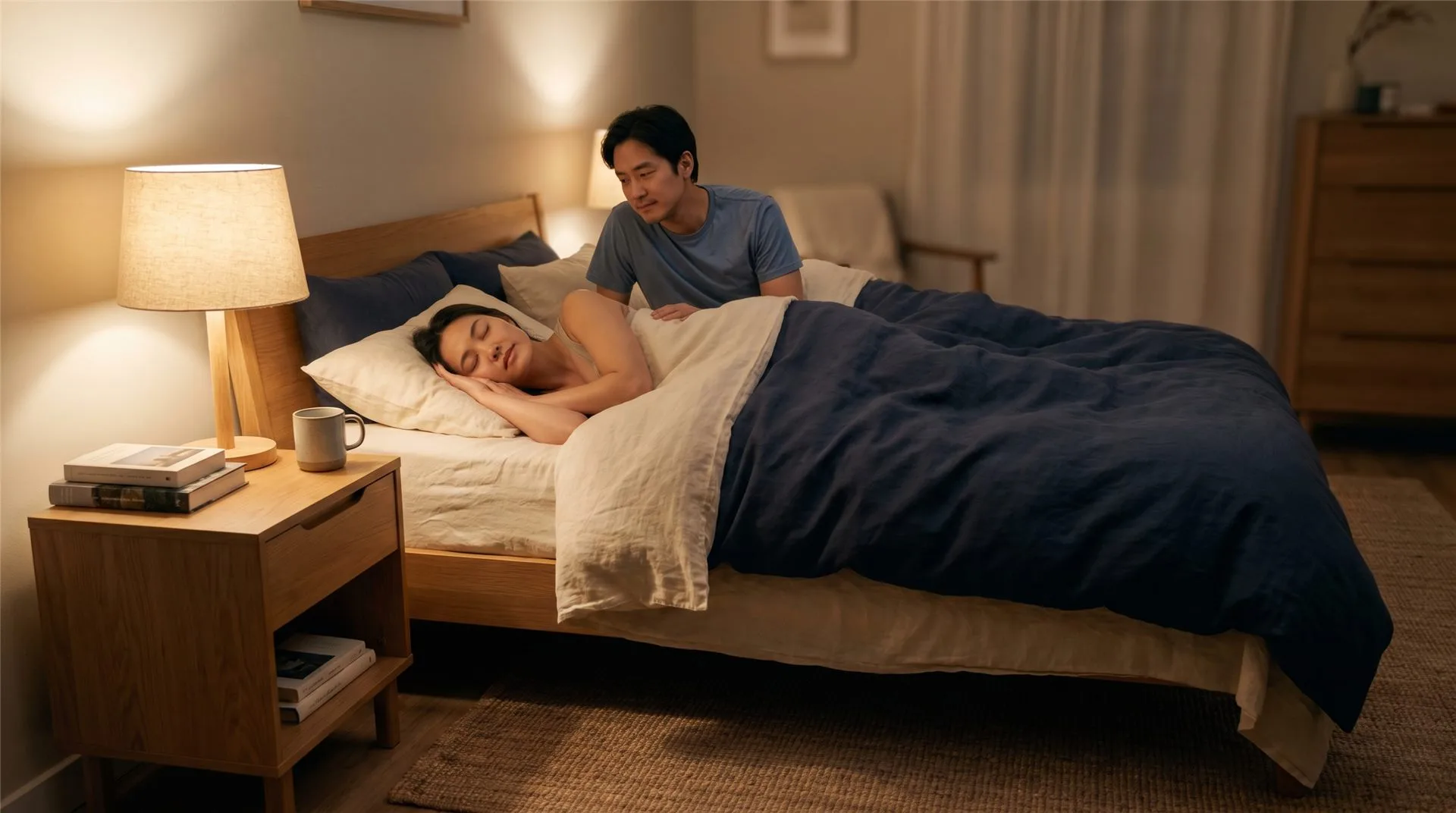
These two things are often confused because they frequently co-occur. Most people with obstructive sleep apnea do snore. But most people who snore do not have sleep apnea.
Snoring is the sound produced when soft tissue in the throat or nasal passages vibrates during breathing. It is extremely common — estimates suggest that roughly 40–50% of adults snore at least occasionally. Most of the time, it is a comfort and lifestyle issue: it disturbs partners, it may indicate suboptimal sleep position or nasal restriction, and it can be addressed with comfort tools, positional changes, and lifestyle adjustments.
Sleep apnea is something different. It is a medical condition characterized by repeated episodes in which the airway partially or fully collapses during sleep, interrupting breathing for ten seconds or more. These interruptions can happen dozens or hundreds of times per night, preventing the body from reaching the deeper stages of restorative sleep and causing significant physiological stress.
The signs that separate the two
The challenge is that both conditions happen during sleep — the patient is unconscious while the key symptoms occur. This is why awareness of daytime symptoms matters.
- Loud snoring with audible pauses in breathing, followed by gasping or choking sounds: this pattern, especially if witnessed by a partner, is a strong indicator of sleep apnea.
- Excessive daytime sleepiness: falling asleep during low-stimulation activities (reading, watching television, sitting in meetings) despite a full night's sleep is not normal and is one of the most reliable signs of sleep apnea.
- Morning headaches: frequent morning headaches can indicate repeated overnight oxygen desaturation, a consequence of repeated breathing interruptions.
- Difficulty concentrating, memory problems, or irritability that is out of proportion to other causes: the cognitive effects of untreated sleep apnea are significant and often misattributed to stress or aging.
- Waking with a dry mouth or sore throat every morning: this suggests breathing through the mouth through the night, which can be a compensatory response to partial airway obstruction.
What wellness tools can — and cannot — do
Airvana products are designed to support comfort and routine for people who want to breathe better through the night. A soft nasal dilator like the AirFlow Clip can help the nasal passage feel more open, which may reduce the resistance that contributes to snoring. A supportive pillow can reduce the positional factors that narrow the airway. A pre-bed routine can support more consistent nasal breathing through the night.
These are meaningful improvements for a lot of people. But they are wellness interventions, not medical treatments. They do not address the structural or neuromuscular causes of obstructive sleep apnea. If sleep apnea is present, the standard of care is a sleep study followed by appropriate medical intervention — which may include a continuous positive airway pressure (CPAP) device, positional therapy, a mandibular advancement device, or in some cases surgery.
The risk of not treating sleep apnea is not just poor sleep. Repeated overnight oxygen desaturation is associated with increased cardiovascular risk, metabolic effects, cognitive decline, and reduced quality of life. This is not a condition where wellness optimization is the right first step.
When to see a doctor
If any of the following apply to you or someone you sleep with, the appropriate next step is a conversation with a healthcare professional — not a new pillow.
- Witnessed pauses in breathing during sleep
- Loud snoring that cannot be reduced with positional changes or nasal support
- Significant daytime sleepiness despite adequate sleep time
- Repeated waking through the night without an obvious cause
- Morning headaches on most days
- Recent weight gain combined with new or worsening snoring
A note on Airvana's approach
We design products for the large group of people whose nighttime breathing discomfort is a comfort issue, not a medical one. We are explicit about what we are not: we are not a medical device company, our products do not treat sleep apnea or any other condition, and we never encourage anyone to use a wellness product as a substitute for medical care.
If you are in the comfort camp — nighttime nasal restriction, mild snoring, the feeling that breathing takes more effort than it should at night — we think our products can genuinely help. If you suspect something more serious is happening, please see a doctor before anything else.
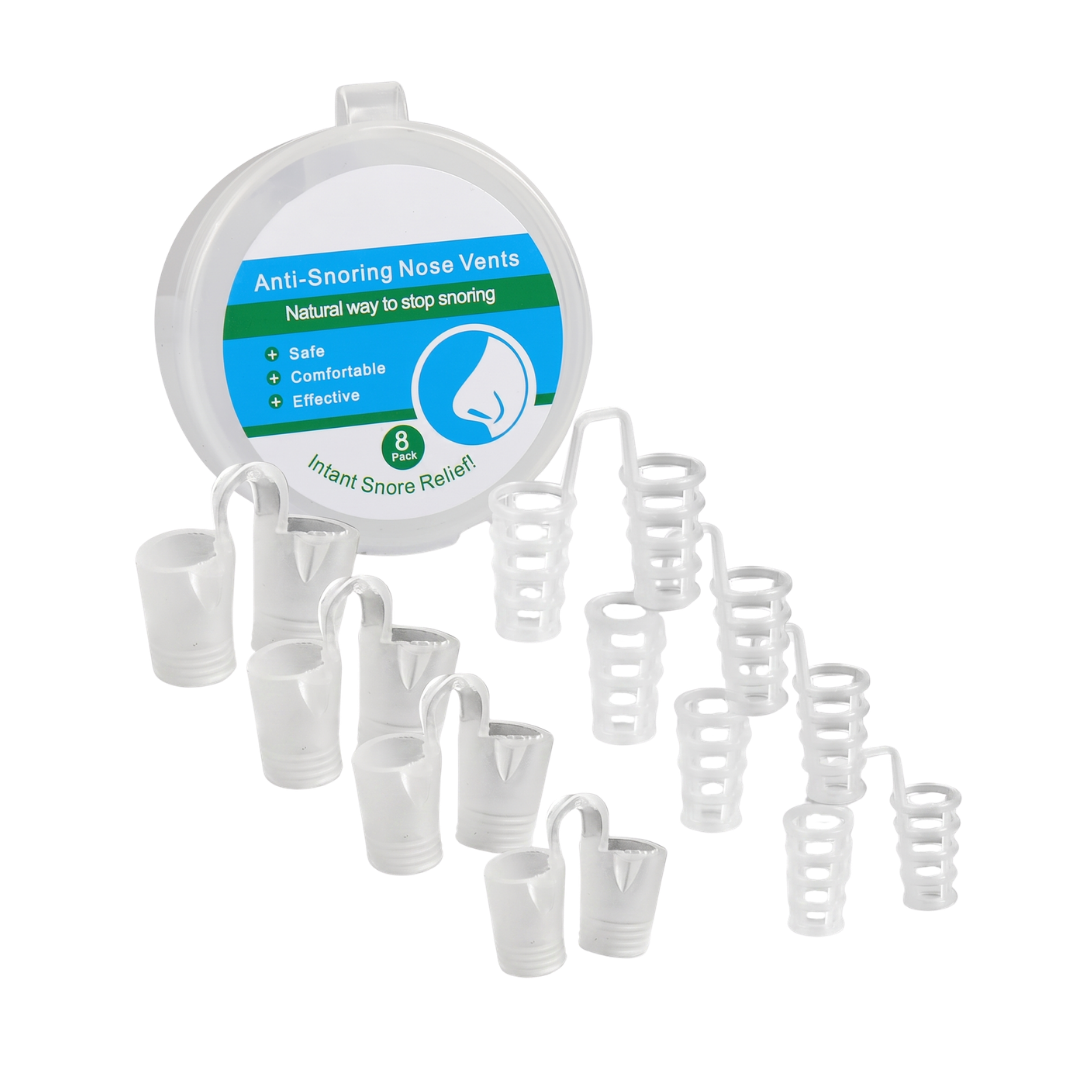
Airvana AirFlow Clip
A soft silicone clip that sits just inside your nostrils and gently holds them open — so you're not fighting for air while you're trying to fall asleep.