Why nasal airflow matters at night
Nighttime nasal breathing influences comfort, dryness, and how rested you feel. Here is the simple version.
Researched and fact-checked by the Airvana editorial team · Educational only — not medical advice

Your nose is the default. Your mouth is the backup.
Most of us spend very little time thinking about which orifice we are breathing through. We just breathe. But the body has a preference: the nose. It filters, warms, and humidifies air before it reaches the lungs. It regulates airflow speed. It produces nitric oxide, which has a role in vasodilation and oxygen uptake. The mouth can do none of this.
During the day, most people breathe nasally without thinking about it. At night, things get more complicated. Body position changes. Muscle tone drops. The nasal passages, which are lined with soft tissue, can narrow slightly — especially after a long day, in dry environments, or as a result of seasonal changes.
When the nose feels restricted, the body takes the path of least resistance. You switch to mouth breathing. And that switch sets off a chain of smaller consequences that most people never connect back to their breathing.
What happens when you mouth-breathe through the night
Mouth breathing during sleep bypasses the nose's filtering and humidifying functions. The result is usually noticeable in the morning: dry mouth, rough throat, the instinct to reach for water before anything else.
It can also be a driver of lighter, more fragmented sleep. Breathing through the mouth tends to produce faster, shallower breathing patterns. There is less natural resistance in the airflow, which sounds like it should be easier but actually disrupts the slow, regulated breathing pattern that supports deeper rest.
People who consistently mouth-breathe at night also report more frequent waking, more restlessness, and a feeling of waking up less refreshed than they went to bed. The connection is easy to overlook because the cause is invisible — happening in the hours when you are not watching.
Why nasal passages can feel narrow at night
The inside of the nose is not rigid. The nasal vestibule — the entrance to the nasal cavity — is made of cartilage and soft tissue. When you inhale, the pressure of airflow can cause this soft area to narrow slightly inward, especially if the tissue is less toned than average or if there is any swelling from congestion, dryness, or inflammation.
Lying down changes this dynamic further. Blood flow redistributes when you are horizontal, which can cause the nasal mucosa to swell slightly. This is why many people who breathe comfortably through their nose during the day find themselves mouth-breathing by 2am.
This is also why positional approaches matter. The side you sleep on, the height of your pillow, the humidity of your room — all of these influence how open your nasal passages feel through the night.
Comfort tools versus medical solutions
It is important to be clear about what nasal airflow comfort tools can and cannot do. Products like soft nasal dilators, nasal strips, and humidifiers are wellness tools. They support the nasal passage during sleep and can make the experience of breathing through the nose feel easier. They are not medical devices. They do not treat underlying conditions.
If nasal restriction is severe, persistent, or accompanied by other symptoms — particularly pauses in breathing, gasping during sleep, or excessive daytime sleepiness — those are signs worth discussing with a healthcare professional. Significant airway restriction during sleep can have medical causes that require medical evaluation.
For the much more common situation — the everyday nasal narrowing that makes nighttime breathing feel harder than it should — a gentle mechanical support like a soft internal nasal dilator is a practical, drug-free option worth trying.
The simplest version
- Your nose is designed for breathing. Your mouth is the backup.
- At night, nasal passages can narrow from muscle relaxation, lying down, dryness, or congestion.
- Mouth breathing bypasses the nose's filtering and humidifying functions and tends to produce lighter sleep.
- Gentle mechanical supports help the nasal opening feel more open without drugs, sprays, or complicated routines.
- Severe or persistent airway restriction during sleep warrants a conversation with a doctor.
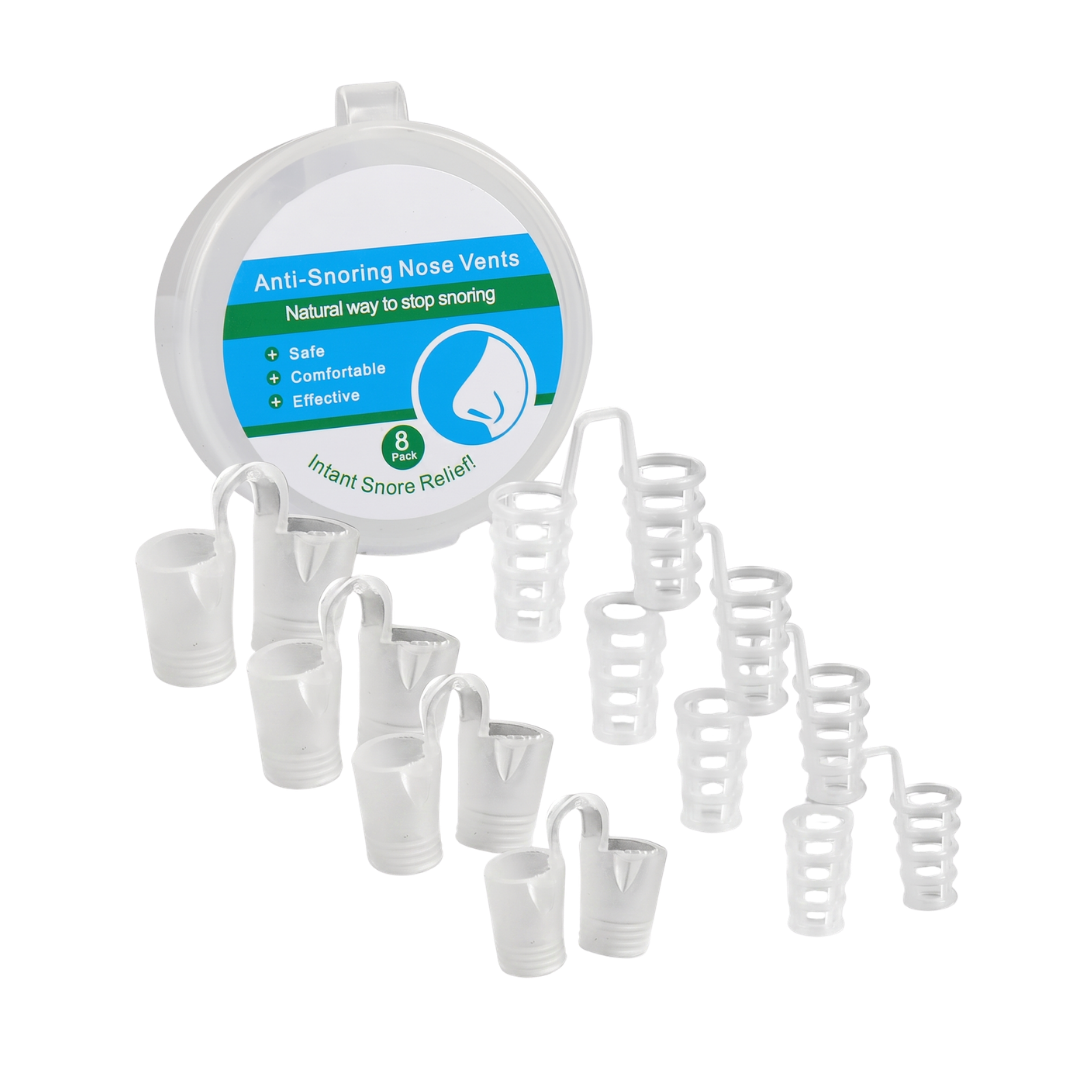
Airvana AirFlow Clip
A soft silicone clip that sits just inside your nostrils and gently holds them open — so you're not fighting for air while you're trying to fall asleep.